
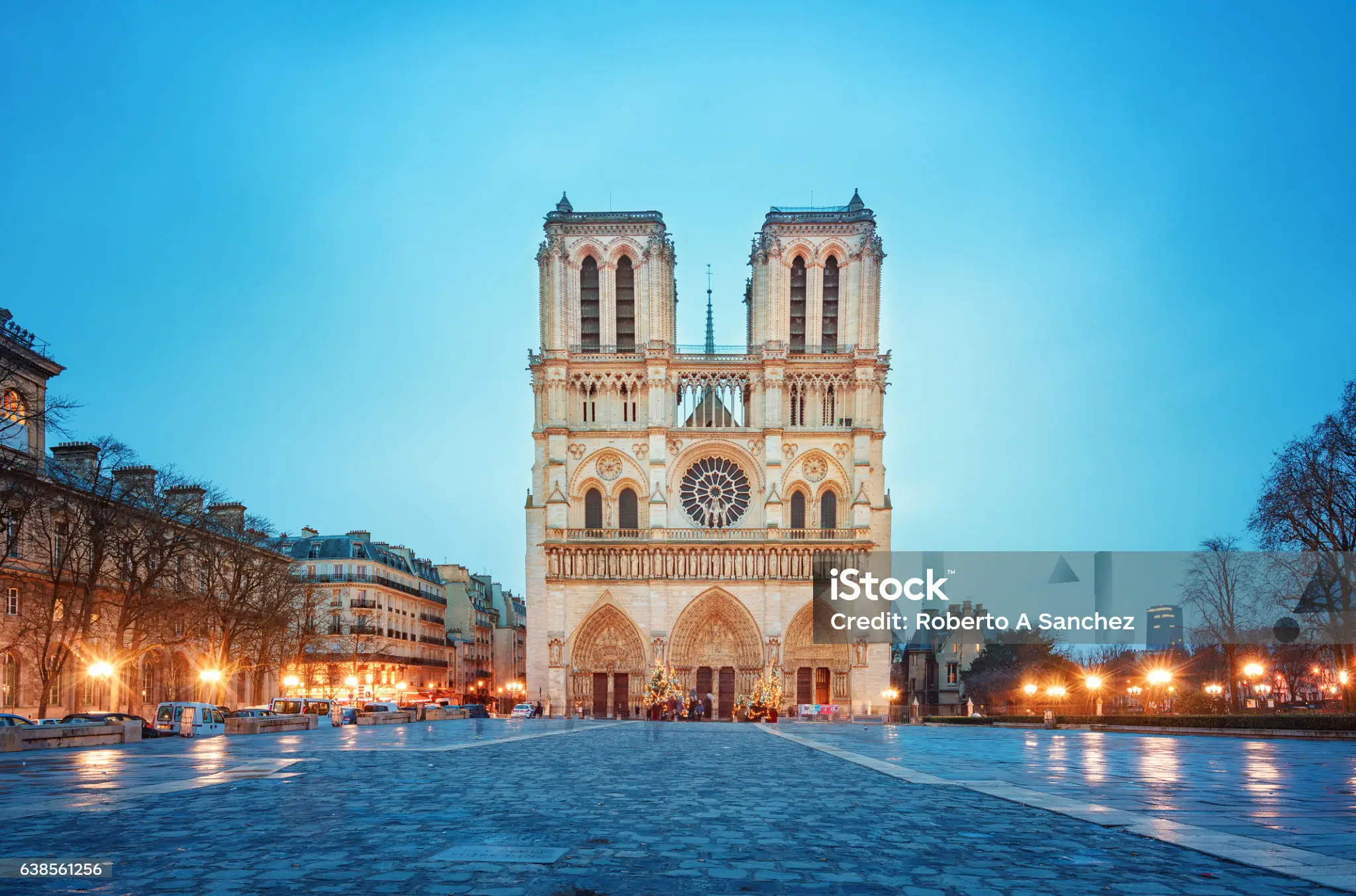
Nestled on the Île de la Cité, a small island in the Seine River, the Notre-Dame Cathedral stands as a monumental testament to human ingenuity, spiritual aspiration, and cultural endurance. For over eight centuries, this Gothic masterpiece has witnessed coronations, revolutions, literary renaissances, and devastating fires, emerging each time as a phoenix reborn from ashes. This article delves into the cathedral’s architectural grandeur, historical significance, cultural symbolism, and its ongoing journey of restoration following the tragic 2019 fire.
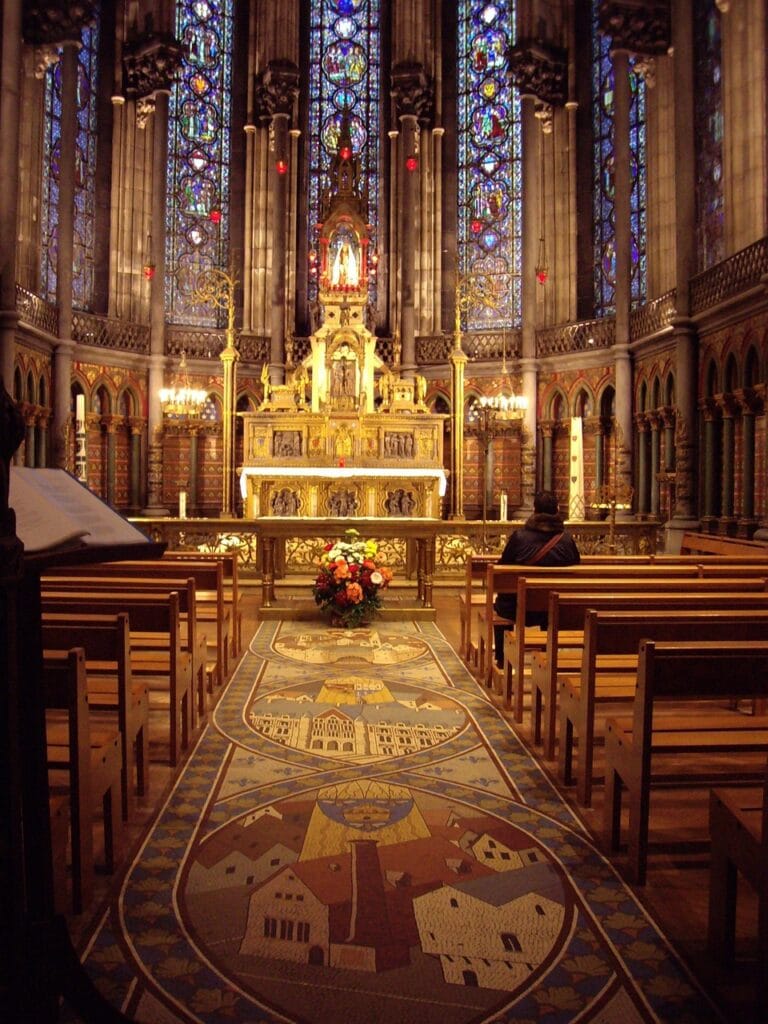
I. Architectural Marvel: The Anatomy of a Gothic Masterpiece
1. Origins and Construction (1163–1345)
Commissioned by Bishop Maurice de Sully in 1163, Notre-Dame’s construction spanned nearly 200 years, reflecting the evolving vision of medieval architects. Its design epitomizes French Gothic architecture, characterized by:
- Ribbed Vaults and Flying Buttresses: Innovations that allowed for taller structures and expansive stained-glass windows, redistributing the weight of the stone roof.
- The Nave and Choir: Soaring to 35 meters (115 feet), the nave’s verticality aimed to draw worshippers’ eyes heavenward. The choir, completed in 1177, features intricate carvings of biblical scenes.
- The West Façade: A harmonious trio of portals—the Virgin Mary, Last Judgment, and St. Anne—flanked by towers rising 69 meters (226 feet). The iconic rose window, added in 1225, spans 9.6 meters (31.5 feet) and symbolizes divine light.
2. The Spire and Roof
The original 13th-century spire, weakened by centuries of weathering, was replaced in the 19th century by Eugène Viollet-le-Duc’s neo-Gothic design. Made of oak covered in lead, it stood 93 meters (305 feet) tall until its collapse during the 2019 fire. The roof, nicknamed “la forêt” (the forest) due to its use of 1,300 oak beams, represented one of the oldest wooden frameworks in Europe.
3. Sculptural Narratives
Over 3,600 sculpted figures adorn the cathedral, including the famous gargoyles and chimera, which served both decorative and functional roles (as water spouts). The Gallery of Kings, depicting 28 biblical monarchs, suffered decapitation during the French Revolution but was restored in the 19th century.
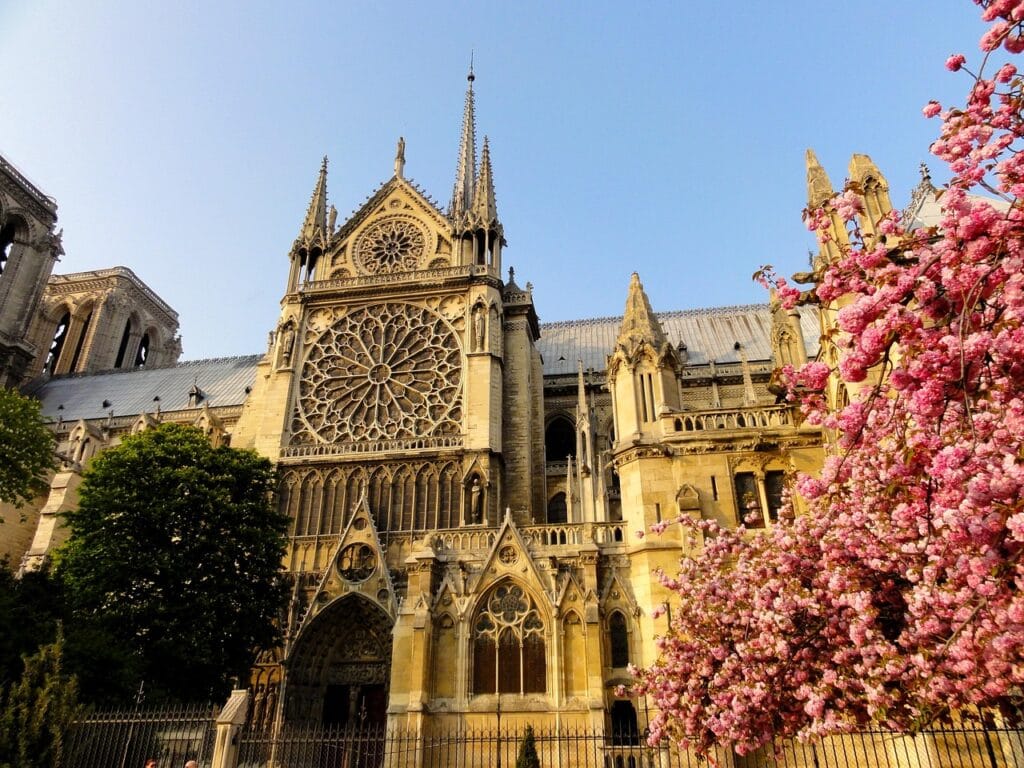
II. Historical Crossroads: From Coronations to Revolution
1. Royal and Religious Significance
- Coronation of Napoleon Bonaparte (1804): In a symbolic fusion of church and state, Napoleon crowned himself emperor within Notre-Dame, asserting his authority over both France and the papacy.
- Joan of Arc’s Rehabilitation (1456): The cathedral hosted the trial that posthumously overturned her heresy conviction, cementing her status as a national heroine.
2. The French Revolution (1789–1799)
The cathedral suffered desecration: its treasures looted, bells melted for cannonballs, and statues destroyed. Rededicated as a “Temple of Reason,” it narrowly escaped demolition due to its structural importance.
3. Victor Hugo’s Intervention
By the 1830s, Notre-Dame had fallen into disrepair. Hugo’s 1831 novel The Hunchback of Notre-Dame rekindled public interest, leading to Viollet-le-Duc’s extensive restoration (1844–1864). His work, though controversial for its creative liberties (e.g., adding the spire and chimera), saved the cathedral from ruin.
III. Cultural Icon: Beyond Religion
1. Literary and Artistic Legacy
Hugo’s novel transformed Notre-Dame into a metaphor for Paris itself—a living entity embodying history and memory. Artists like Monet, who painted the façade in varying light conditions, and filmmakers, from The Hunchback adaptations to Before Sunset, have immortalized its silhouette.
2. UNESCO World Heritage Site
Designated in 1991 as part of the “Paris, Banks of the Seine” site, Notre-Dame symbolizes the universal value of Gothic architecture and urban history.
3. Global Pilgrimage Site
Pre-2019, the cathedral attracted 13 million annual visitors, drawn by its relics (including the Crown of Thorns), the panoramic view from the towers, and the ethereal glow of its stained glass.
IV. The 2019 Fire: Destruction and Renewal
1. The Night of April 15, 2019
A fire, likely caused by an electrical short circuit during restoration work, engulfed the roof and spire. Over 400 firefighters battled the blaze for 15 hours, saving the main structure and bell towers. The world watched in horror as flames consumed a symbol of human achievement.
2. Losses and Salvage Efforts
- The oak roof and spire were destroyed.
- The north rose window’s 13th-century glass survived but sustained heat damage.
- Relics, including the Crown of Thorns, were rescued by a human chain of priests and emergency workers.
3. The Restoration: A Phoenix Rises
President Emmanuel Macron pledged to rebuild Notre-Dame by 2024, though delays (including lead contamination and pandemic setbacks) extended the timeline. Key efforts include:
- Oak Sourcing: Over 1,000 ancient oaks from French forests were selected to reconstruct the roof.
- Traditional Craftsmanship: Stonecutters, carpenters, and glassmakers employ medieval techniques alongside 3D laser scanning for precision.
- Public and Private Funding: Donations exceeded €1 billion, though debates over modern vs. historical fidelity persist (e.g., proposed contemporary stained-glass designs).
V. Notre-Dame Today: A Symbol of Resilience
As of 2025, the restoration nears completion. The new spire, faithfully reconstructed using Viollet-le-Duc’s plans, gleams with fresh lead. The nave, once shrouded in scaffolding, now echoes with the sounds of craftsmen’s chisels and tourists’ whispers. The cathedral’s rebirth mirrors humanity’s capacity to mend what is broken, blending reverence for the past with innovation for the future.
Lessons from Notre-Dame
- Cultural Heritage as Collective Memory: The global outcry post-fire underscored how landmarks like Notre-Dame transcend borders, uniting people in shared loss and hope.
- Sustainability in Restoration: The project has sparked discussions about using fire-resistant materials and renewable energy without compromising historical integrity.
Epilogue: Eternal Flame
Notre-Dame de Paris is more than stone and mortar; it is a living chronicle of faith, art, and resilience. From its medieval origins to its 21st-century resurrection, the cathedral reminds us that beauty and meaning can emerge from ashes—a lesson as timeless as its vaulted arches. As sunlight filters through its restored rose windows, casting kaleidoscopic hues onto the ancient floor, Notre-Dame whispers: “I endure.”

 English
 Spanish
 German
 French
 Italian
 Chinese
 Japanese
 Korean
 Portuguese
 Turkish